Univ.-Prof. Dr. Maria Ivanova-Bieg is Professor of Prehistory at the Faculty of Historical and Cultural Studies of Johannes Gutenberg University Mainz and head of the Department of Prehistoric Archaeology at the Institute of Ancient Studies. After completing her doctorate at the University of Tübingen, she worked at the Roman-Germanic Commission of the German Archaeological Institute in Frankfurt, at the University of Heidelberg, and at the University of Vienna. Her research focuses on the European Neolithic. She studies material culture and social processes using an interdisciplinary approach that combines archaeology, cultural anthropology, and natural sciences. Her main research interests include the emergence and spread of early agro-pastoral societies, the development of social complexity in the Copper Age, and the formation of transregional exchange and communication networks across the Black Sea and Mediterranean regions. Current projects also address the earliest spread of ceramic technology in Central America and the associated economic and social changes. From 2023 to 2028, she is a fellow of the Gutenberg Research College of JGU Mainz.
- Prehistoric archaeology, Neolithic and Copper Age
- Early agriculture and farming systems
- The Mediterranean: social, economic, and ecological networks
Academic career
- Since August 2023
Full Professor, Institute of Ancient Studies, Johannes Gutenberg University Mainz; Head of the Division of Prehistoric and Protohistoric Archaeology - 2020–2023
Associate Professor, VIAS, University of Vienna - 2006–2020
Research Associate at Heidelberg University and at the Roman-Germanic Commission of the German Archaeological Institute, Frankfurt - 2006
Inaugural dissertation (PhD) in Prehistory, University of Tübingen, supervised by Univ.-Prof. Dr Manfred Korfmann and Univ.-Prof. Dr Manfred Eggert - 1996–2006
Undergraduate and postgraduate studies in Prehistoric Archaeology, Classical Archaeology, and History at the Universities of Veliko Turnovo and Tübingen
Fellowships / Prizes
- 2023-2028
Fellowship of the Gutenberg-Forschungskolleg (GFK), Johannes Gutenberg-Universität Mainz - 2020-2026
ERC (European Research Council) Consolidator Grant - 2017
Fellowship of the Heidelberg Center for Transcultural Studies (HCTS), Universität Heidelberg - 2008
Travel Award (Reisestipendium) of the German Archaeological Institute - 2006
Distinguished Dissertation Prize of the Faculty of Humanities, University of Tübingen
- since 2024
Member of the Steering Committee of the Archaeology Rhine-Main Network (VARM) - 2024-2026
Deputy Managing Director of the Institute of Ancient Studies, Johannes Gutenberg University Mainz. - since 2022
Member of the Scientific Advisory Board of the European Association of Archaeologists (EAA) - 2018-2023
Editorial board member of Scientific Reports (Springer Nature), Earth and Environmental Sciences Section
- https://scholar.google.com/citations?hl=de&user=VDoGew8AAAAJ&view_op=list_works&sortby=pubdate
- https://orcid.org/0000-0002-4343-7005
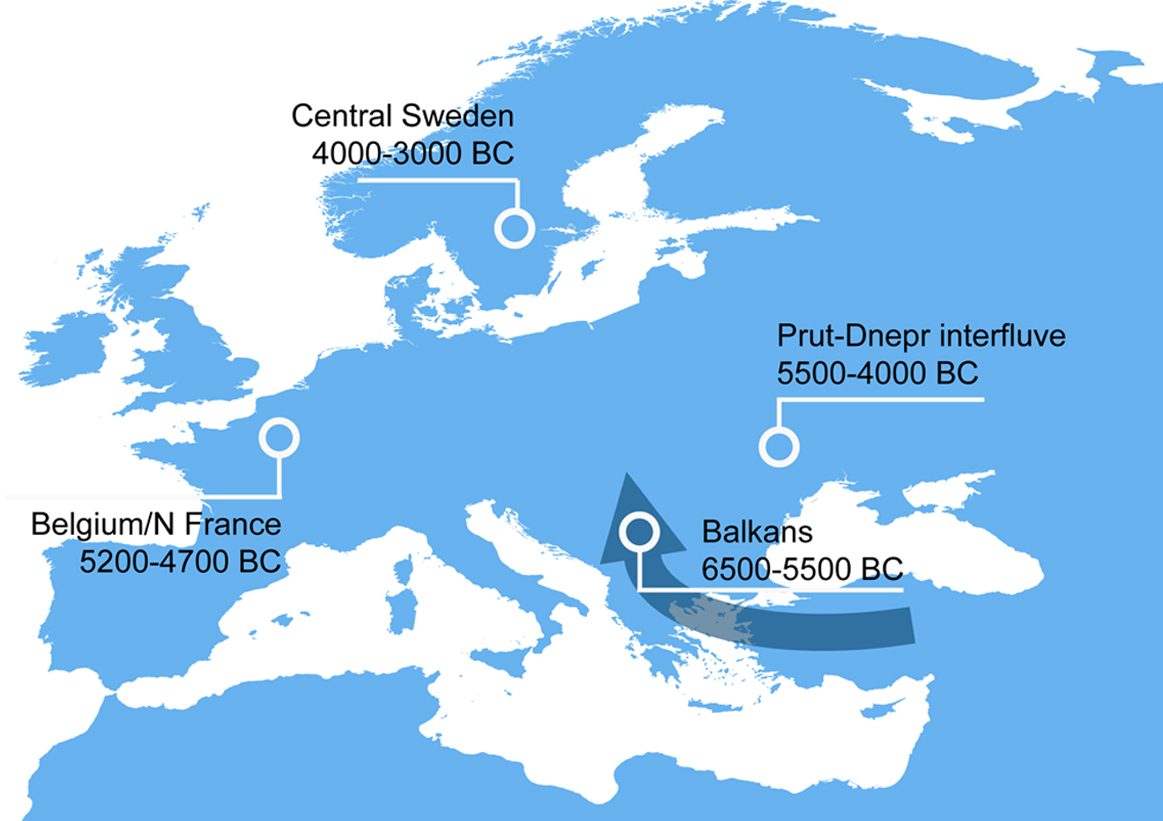
SUSTAIN is a five-year research project (2020-2026) funded by the European Research Council. It seeks to understand the sustainability of Early Neolithic agricultural societies in Europe through a combination of climate and biodiversity informatics, bioarchaeology and agent-based modeling. It examines societies that have only recently settled in new environments and started to practice mixed agriculture and pastoralism. This then novel way of interacting with the environment involved a different scale of intervention in the life cycles of plants and animals and was of fundamental importance for later developments in Europe.
Further information: https://sustain-erc.org
The team
- Prof. Maria Ivanova-Bieg (Principal Investigator; Pre- and Protohistoric Archaeology, JGU Mainz)
- Prof. Richard Evershed (University of Bristol, UK)
- Dr. Melanie Roffet-Salque (University of Bristol, UK)
- Prof. Thomas Hickler (Senkenberg Society, Frankfurt, Germany)
- Dr. Wolfgang Traylor (Senkenberg Gesellschaft, Frankfurt, Germany)
- Prof. Mark Thomas (University College London, UK)
- Dr. Sayuri Kochi (Pre- and Protohistoric Archaeology, JGU Mainz)
- Dr. Phoebe Heddell-Stevens (Pre- and Protohistoric Archaeology, JGU Mainz)
cooperations
- Dr. Tina Lüdecke (Max Planck Institute of Chemistry, Mainz, Germany)
- Adrian Timpson (University College London, UK)
- Dr. Marie Balasse (MNHN, Paris, France)
- Dr. Elena Marinova (State Office for Cultural Heritage Baden-Württemberg, Germany)
Financing
European Research Council, CoG, GA 865515
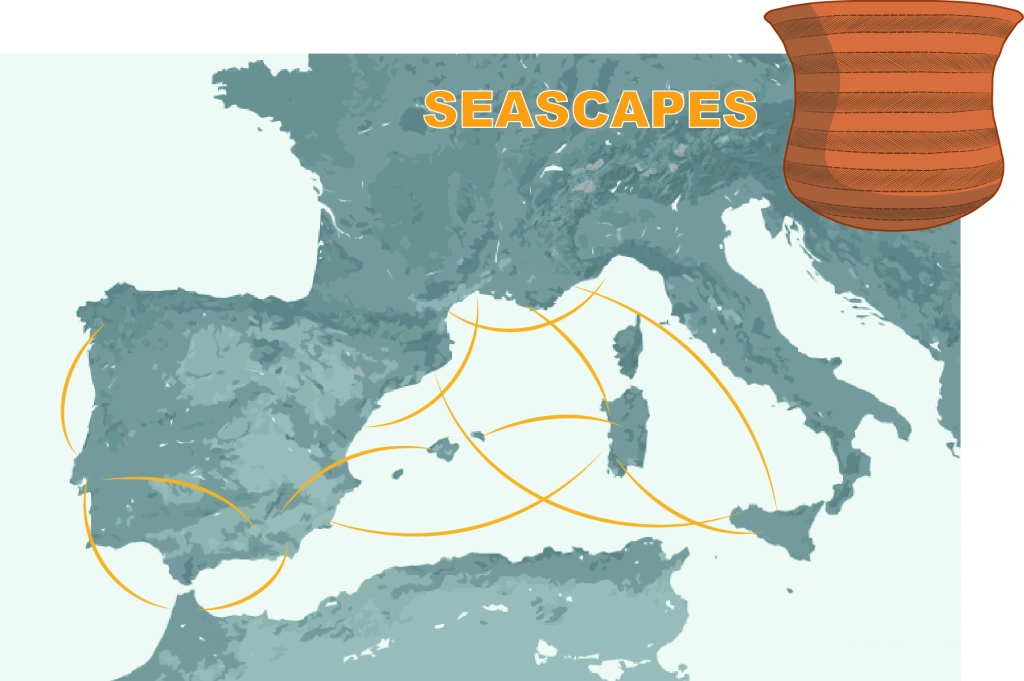
The Seascapes project (2022-2025) investigates the Bell Beaker phenomenon in the western Mediterranean during the third millennium BC, a period characterized by increased human mobility and the emergence of maritime networks. Radiocarbon dating (including the analysis of specific compounds), the analysis of organic residues in the pottery and spatio-temporal modeling will be used to determine traffic routes, contact points and directions of movement.
Further information: https://seascapesproject.wordpress.com
The team
- Prof. Maria Ivanova-Bieg (project manager; Pre- and Protohistoric Archaeology, Johannes Gutenberg University Mainz, Germany)
- Assoc. Prof. Lucy Cramp (Projektleitung; Department of Anthropology and Archaeology, University of Bristol, UK)
- Dr. Eve Derenne (Pre- and Protohistoric Archaeology, Johannes Gutenberg University Mainz, Germany)
- Dr. Alex Bayliss (Historic England, UK)
- Prof. Mark Thomas (University College London, UK)
- Adrian Timpson (University College London, UK)
- Dr. Elena Marinova (State Office for Cultural Heritage Baden-Württemberg, Germany)
cooperations
- Dr. Michael Kunst (retired from the German Archaeological Institute in Madrid)
- Prof. Ana Catarina Sousa (University of Lisbon, Portugal)
- Prof. Victor Gonçalves† (University of Lisbon, Portugal)
- Prof. Juan Antonio Cámara (University of Granada, Spain)
- Dr. Alberto Dorado Alejos (University of Granada, Spain)
- Prof. Manuel Calvo Trias (University of the Balearic Islands, Spain)
- Dr. Damià Ramis (independent researcher, Spain)
- Dr. Jaume Coll Conesa (Museo Nacional de Cerámica y Artes Suntuarias González Martí, Spain)
- Prof. Olivier Lemercier (University of Montpellier, France)
- Dr. Fabien Convertini (INRAP, France)
- Prof. Riccardo Cicilloni (University of Cagliari, Italy)
- Prof. Carlo Lugliè† (University of Cagliari, Italy)
- Dr. Vitale Sparacello (University of Cagliari, Italy)
- Dr. Gianfranca Salis (Soprintendenza Archeologia, Belle Arti e Paesaggio, Cagliari, Italy)
- Dr. Enrico Giannitrapani (University of Palermo, Italy)
- Dr. Filippo Iannì (Arkeos Sicily, Italy)
- Dr. Salvatore Chilardi (independent researcher, Italy)
- Dr. Emilie Blaise (UMR 5140, Archéologie des Sociétés Méditerranéennes, France)
Financing
- Austrian Science Fund (FWF)
- UK Arts and Humanities Research Council (AHRC)
This GFK-funded project explores the origins and spread of ceramic vessels in Mesoamerica during the 2nd and 1st millennia BCE. Using lipid analysis and CSRA dating, we investigate the earliest pottery in diverse regions, including the Pacific coast, Central Highland Mexico, the Gulf of Mexico, the Guatemalan highlands, and the Maya lowlands of Guatemala, Mexico, and Belize. Our goals include identifying when pottery was introduced, its earliest uses, its connection to subsistence changes, significance in diet, rituals, and political developments during this transformative period.
Funding:
Gutenberg Research College of the JGU
Principal investigator:
- Prof. Dr. Maria Ivanova-Bieg (Pre- and Protohistoric Archaeology, Johannes Gutenberg University Mainz, Germany)
Team:
- Dr. Raúl Ortiz (Pre- and Protohistoric Archaeology, Johannes Gutenberg University Mainz, Germany)
- Dr. Tim Lauschke (Pre- and Protohistoric Archaeology, Johannes Gutenberg University Mainz, Germany)
- Dr. Emmanuelle Casanova (Laboratoire des Sciences du Climat et de l’Environnement – LSCE, France)
Collaborators and local partners:
- Dr. Kaori Sakaguchi-Söder (Institut für Angewandte Geowissenschaften, TU Darmstadt)
- Prof. Dr. Moritz Bigalke (Institut für Angewandte Geowissenschaften, TU Darmstadt)
- Dr. Barbara Arroyo (Universidad Francisco Marroquin, Guatemala)
- Prof. Timothy W. Pugh (Queens College and The Graduate Center/CUNY, US)
- Prof. Michael Love (Department of Anthropology, California State University, Northridge)
- Prof. Takeshi Inomata (University of Arizona, US)
- Prof. Daniela Triadan (University of Arizona, US)
- Prof. Guy David Hepp, Ph.D. (California State University, San Bernardino, US)
- Prof. Robert M. Rosenswig (University at Albany, US)
- Tomás Barrientos (Centro de Investigaciones Arqueológicas y Antropológicas, Universidad del Valle de Guatemala)
This project investigates animal mobility at the Chalcolithic megasite of Valencina de la Concepción to explore its role as a supra-regional ritual and exchange center. Using a multi-isotope approach (⁸⁷Sr/⁸⁶Sr, δ¹⁸O, δ¹³C, δ¹⁵N, δ³⁴S) on faunal remains, the study reconstructs the geographic origins and diets of pigs, cattle, equids, and sheep. By determining whether livestock—and by extension, people—were local or came from distant regions, the project tests models of social aggregation, mobility, and connectivity in prehistoric Iberia and contributes to broader understandings of prehistoric exchange networks.
Funding:
Gutenberg Research College of the JGU
Principal investigator:
- Prof. Dr. Maria Ivanova-Bieg (Pre- and Protohistoric Archaeology, Johannes Gutenberg University Mainz, Germany)
Collaborators and local partners:
- Prof. Dr. Leonardo García Sanjuán, Departamento Prehistoria y Arqueología, Universidad de Sevilla
- Dr. Raquel María Montero Artús, Departamento Prehistoria y Arqueología, Universidad de Sevilla
- Juan Manuel Vargas Jiménez, Museo de Valencina
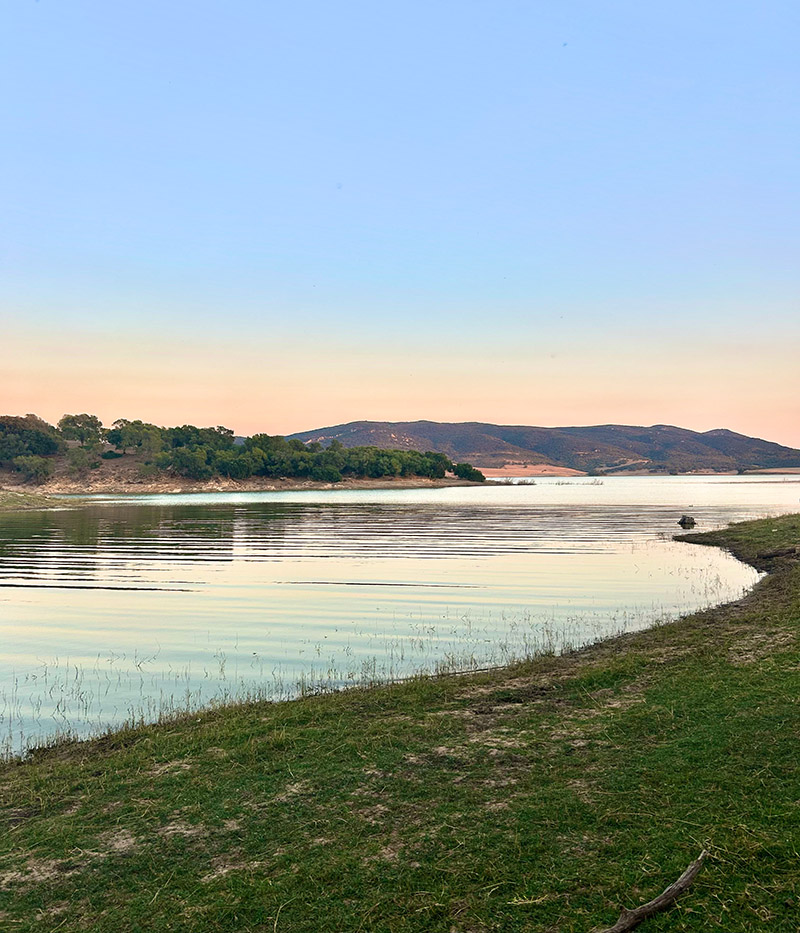
The HUMANOS project investigates patterns of human mobility and diet across the Central and Western Mediterranean during the Copper Age (c. 3200–2200 BCE), a period marked by major social transformations, the emergence of complex societies, and the spread of Bell Beaker material culture across Europe.
Using a multi-isotope approach (⁸⁷Sr/⁸⁶Sr, δ¹⁸O, δ¹³C, δ¹⁵N, δ³⁴S), together with other biomolecular methods, we aim to reconstruct where prehistoric individuals from selected sites grew up, where they lived, and what they ate. By comparing mobility and subsistence patterns across different regions and cultural contexts, HUMANOS seeks to shed light on the scale and nature of human movement during one of the most dynamic periods of European prehistory, and to contribute to a broader understanding of how connectivity shaped societies across the late prehistoric Mediterranean world.
Funding
Gutenberg Forschungskolleg der JGU
Team
- Maria Ivanova-Bieg (PI; Pre- and Protohistoric Archaeology, Johannes Gutenberg University Mainz, Germany)
- Valentina Martinoia (Pre- and Protohistoric Archaeology, Johannes Gutenberg University Mainz, Germany)
Collaborators and local partners
- Richard Madgwick, University of Cardiff (UK)
- Lucy Cramp, University of Bristol (UK)
- Vicente Castañeda, University of Cádiz (Spain)
- Juan Valentín Fernández de la Gala, University of Cádiz (Spain)
- Alfredo Fernández-Enríquez, University of Cádiz (Spain)
- Zita Laffranchi, University of Cordoba (Spain)
- Rafael M. Martínez Sánchez, University of Cordoba (Spain)
- Juan Antonio Cámara Serrano, University of Granada (Spain)
- Marco Milella, University of Pisa (Italy)

